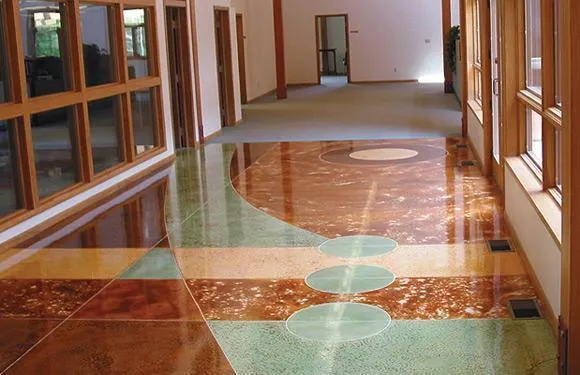

Picture walking into a Dubai villa where the floors gleam like mirrors, reflecting the city’s golden skyline through floor-to-ceiling windows. The surface beneath your feet isn’t marble or granite – it’s polished concrete, and it’s becoming the flooring choice that’s reshaping how we think about luxury and practicality in the UAE.
Dubai’s construction boom has always been about pushing boundaries, and concrete polishing represents the perfect marriage of innovation and necessity. What was once relegated to warehouses and industrial spaces has transformed into a sophisticated flooring solution that’s taking over everything from high-end restaurants in Downtown Dubai to family homes in Arabian Ranches.
Why Concrete Polishing Is Perfect for Dubai’s Climate
Living in Dubai means dealing with sand, humidity, and extreme temperature variations – conditions that can wreak havoc on traditional flooring materials. Concrete polishing addresses these challenges head-on in ways most people don’t realize.
The process creates a surface that’s incredibly dense and non-porous. When done correctly, polished concrete becomes virtually impervious to the fine sand particles that somehow find their way into every Dubai home. Unlike natural stone or ceramic tiles, there are no grout lines to trap sand or require constant cleaning.
Dubai’s notorious humidity swings – from air-conditioned indoor environments to the outdoor sauna – cause many flooring materials to expand and contract. Polished concrete remains stable, eliminating the cracking and shifting issues common with other materials.
The reflective properties of polished concrete also provide an unexpected benefit in Dubai’s intense lighting conditions. The reflective floor finish greatly reduces the amount of artificial lighting needed in the area, resulting in significant energy savings, which translates to lower DEWA bills – something every Dubai resident appreciates.
The Hidden Complexity Most People Miss
Many assume concrete polishing is simply grinding a surface until it shines. That’s like saying cooking is just applying heat to ingredients. The reality involves a precise sequence of diamond-embedded grinding pads, chemical densifiers, and specialized techniques that determine whether you end up with a stunning floor or an expensive mistake.
The biggest misconception involves timing. Several stages of grinding must occur at specific intervals as the concrete cures. Skip a stage or rush the process, and you’ll never achieve that mirror-like finish that makes polished concrete so appealing.
Another overlooked factor is aggregate exposure. The level of stone aggregate revealed during grinding dramatically changes the final appearance. Cream polishing shows minimal aggregate, while full exposure creates a terrazzo-like effect with visible stones throughout the surface.
Common Mistakes That Cost Dubai Homeowners
The most expensive error involves attempting concrete polishing on unsuitable surfaces. Not all concrete can be polished effectively. Concrete that’s too soft, has surface damage, or contains certain admixtures may never achieve the desired results, regardless of technique.
Many Dubai properties built during the rapid expansion years used concrete mixes optimized for speed rather than polishability. These surfaces often require remedial work or overlays before polishing becomes viable.
Temperature control during installation is critical in Dubai’s climate. Concrete that cures too quickly in extreme heat often develops micro-cracks that become visible only after polishing begins. Professional contractors know to adjust their schedules and methods based on Dubai’s seasonal temperature variations.
Another frequent oversight involves proper preparation of the substrate. Existing coatings, adhesive residues, or surface contaminants must be completely removed before polishing begins. Half-measures during preparation always show in the final result.
What Dubai’s Construction Standards Mean for Polishing
Dubai Municipality’s stringent building codes actually work in favor of concrete polishing. The structural concrete in most Dubai buildings meets or exceeds the density requirements for successful polishing, though the surface preparation requirements can be more intensive due to construction methods commonly used here.
Many Dubai developers now specify polishing-ready concrete mixes in their projects, recognizing the growing demand. This forward-thinking approach eliminates many of the compatibility issues that plagued earlier concrete polishing projects.
The city’s focus on sustainability aligns perfectly with polished concrete’s environmental benefits. Every other floor surface installed today rests on a concrete slab and therefore represents additional material and labor costs to install. By polishing the existing concrete, you eliminate the environmental impact of additional flooring materials.
Maintenance Realities in Dubai’s Environment
Polished concrete’s reputation for being low-maintenance is accurate, but understanding what “low-maintenance” means in Dubai’s specific context prevents unrealistic expectations.
The surface resists most stains and can be cleaned with simple mopping, but Dubai’s dust requires more frequent cleaning than you might expect in other climates. The good news is that cleaning is straightforward – no special products or techniques required.
Despite its glassy surface, polished concrete is not slippery, making it a great choice for high-traffic lobbies and foyers. This safety aspect is particularly relevant in Dubai’s commercial spaces, where marble floors can become hazardous when wet.
The reflective properties that provide energy savings also show every speck of dust more clearly than darker surfaces. Regular dust mopping becomes essential, though it’s far easier than maintaining grout lines or dealing with stained natural stone.
The Economics Behind Dubai’s Concrete Polishing Boom
The economics of concrete polishing in Dubai make sense on multiple levels. Initial costs compare favorably to high-end alternatives like imported marble or hardwood, while the lifespan significantly exceeds most flooring options.
Energy savings from reduced lighting requirements add up quickly with Dubai’s electricity rates. The thermal mass of polished concrete also helps moderate indoor temperatures, reducing air conditioning demands during the cooler months.
Property values see a positive impact from well-executed, polished concrete installations. The modern, industrial-chic aesthetic appeals to Dubai’s international population, while the practical benefits resonate with long-term residents who understand the local climate challenges.
Looking Forward: What’s Next for Concrete Polishing in Dubai
The technique continues evolving with new technologies and methods specifically adapted for Middle Eastern conditions. Recent innovations include specialized densifiers that perform better in high-humidity environments and grinding techniques optimized for the mineral content common in regional concrete.
Decorative options are expanding beyond traditional gray concrete. Colored concrete, embedded aggregates, and artistic scoring patterns allow for customization that rivals any flooring material while maintaining concrete polishing’s practical advantages.
Smart building integration is another frontier. Polished concrete floors can incorporate radiant heating systems more effectively than many alternatives, and the thermal mass works beautifully with Dubai’s increasingly sophisticated HVAC systems.
Understanding concrete polishing means recognizing it’s not just about creating a shiny floor – it’s about maximizing the potential of materials that already exist in your space. In a city built on innovation and efficiency, that philosophy resonates perfectly.
Consider starting with a small area like a garage or storage room to experience firsthand how polished concrete performs in Dubai’s unique environment. The knowledge gained from that initial project will prove invaluable if you decide to expand to larger living areas.
Frequently Asked Questions
Q: How long does concrete polishing last in Dubai’s climate?
A: Properly executed, polished concrete can last 15-20 years or more in Dubai’s climate. The surface may require re-polishing every 5-10 years, depending on traffic levels, but the underlying treatment remains effective much longer than most flooring alternatives.
Q: Can existing concrete floors in Dubai homes be polished?
A: Most existing concrete can be polished, but the age and condition of the concrete affect the final result. Concrete in Dubai buildings from the last 15 years generally polishes well, though surface preparation may be needed if previous coatings or treatments were applied.
Q: What’s the cost of concrete polishing per square meter in Dubai? A: Concrete polishing costs in Dubai typically range from AED 25-60 per square meter, depending on the desired finish level, surface condition, and project size. This compares favorably to high-end alternatives like imported marble or hardwood flooring.
Q: Is polished concrete slippery when wet in Dubai’s humidity?
A: No, properly polished concrete provides good slip resistance even when wet. The polishing process creates a smooth but not slick surface. However, avoid over-polishing to an extremely high gloss level in areas prone to moisture.
Q: How does concrete polishing handle Dubai’s sand and dust?
A: Polished concrete handles sand and dust exceptionally well. The dense, non-porous surface prevents particles from embedding in the floor, making cleaning easier than with textured surfaces or grout lines found in tile installations.
Q: Can polished concrete crack in Dubai’s temperature changes?
A: Quality polished concrete is highly resistant to cracking from temperature changes. The polishing process actually strengthens the surface, and proper installation includes expansion joints to accommodate any movement in Dubai’s climate variations.
Q: What maintenance does polished concrete require in Dubai?
A: Maintenance is minimal – regular dust mopping and occasional damp mopping with pH-neutral cleaners. In Dubai’s dusty environment, daily dust mopping keeps the floor looking its best. Deep cleaning may be needed monthly, but no waxing or special treatments are required.